
Starting as a Virtual Assistant: No Experience Needed
The transition to remote work has completely transformed the modern business landscape. Today, entrepreneurs and companies are heavily relying on distributed teams to scale their operations. If you are looking to enter this booming industry, you have likely found yourself searching for a comprehensive virtual assistant guide. The most common hurdle beginners face is the dreaded experience gap. You might be wondering: how can I become a virtual assistant with no experience?
The good news is that the barrier to entry is much lower than you think. Every expert started somewhere, and the digital service industry is uniquely forgiving to newcomers who possess a strong work ethic, organizational skills, and a willingness to learn.
This guide will break down exactly how to launch your career, how to find your first clients, and most importantly, how to understand the mindset of the business owners who will be hiring you.

Breaking Into the Industry
How to Become a Virtual Assistant with No Experience
Landing virtual assistant jobs with no experience begins with a mindset shift. You are not an employee asking for a job; you are a service provider offering solutions to a business owner’s problems.
Even as a virtual assistant with no experience in a formal remote role, you already possess transferable skills. Have you ever managed a family calendar? Organized a cluttered email inbox? Booked complex travel arrangements for a group vacation? These are highly marketable skills. The key to learning how to become a virtual assistant with no experience is identifying these everyday tasks and packaging them as professional services.
What Tasks Can a Virtual Assistant Do?
When starting out, it is best to offer general administrative support before niching down. If you are unsure of what to offer, here is a breakdown of what tasks can a virtual assistant do:
- Email Management: Filtering spam, responding to basic inquiries, and organizing inboxes.
- Calendar Management: Scheduling meetings, avoiding double-bookings, and setting reminders.
- Data Entry: Inputting information into spreadsheets or CRM software.
- Customer Support: Handling live chat or email tickets.
- Specialized Niches: Once you gain confidence, you can offer specialized skills. For example, offering real estate virtual assistant services—like managing MLS listings or following up with leads—is highly lucrative.
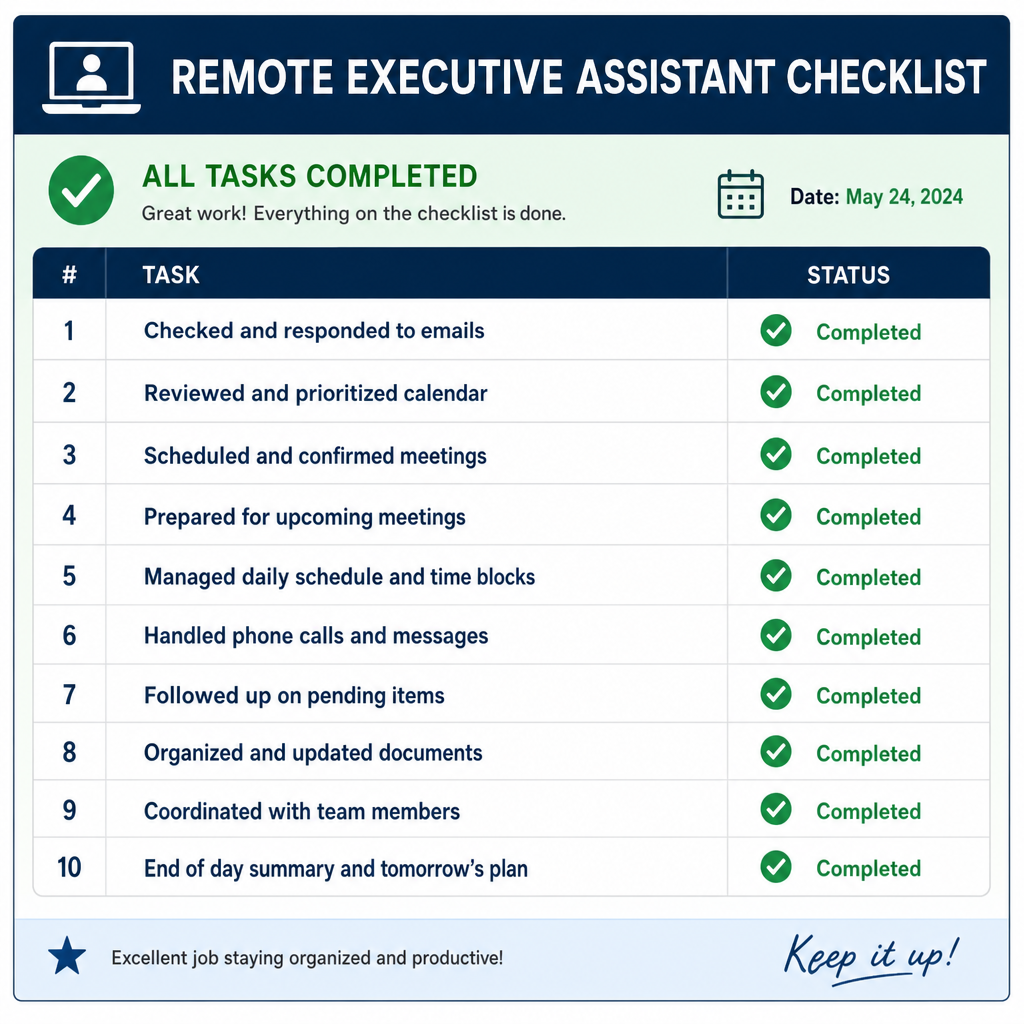
The Remote Executive Assistant Skills Checklist
To present yourself as a competent professional, ensure you meet the criteria on this remote executive assistant skills checklist:
- Impeccable Communication: Clear, concise, and professional written and verbal English.
- Tech-Savviness: The ability to quickly learn new software.
- Time Management: Meeting deadlines without direct supervision.
- Problem-Solving: Figuring out solutions independently before asking the client.
- Attention to Detail: Catching errors that others miss.
Finding Work and Setting Your Rates
Where to Find Remote Assistant Jobs
When you are ready to take on clients, you need to know where they are looking. Business owners often rely on the best platforms to find remote administrative help. As a beginner, you should establish a presence on these platforms:
- Freelance Marketplaces: Upwork and Fiverr are excellent starting points. You can build a portfolio and collect reviews.
- Networking on LinkedIn: Optimize your profile to highlight your organizational skills. Connect with small business owners and startup founders.
- Agencies: Many clients prefer to use the top virtual assistant agencies for entrepreneurs (like Belay or Time Etc.). While some agencies require experience, others offer rigorous training programs for beginners and match you directly with clients.
How Much Do Virtual Assistants Charge Per Hour?
Pricing is a major point of confusion for beginners. How much do virtual assistants charge per hour?
If you are a US-based beginner, standard rates typically start between $15 to $20 per hour for general administrative tasks. As you gain experience and specialize (for example, handling bookkeeping or complex social media management), your rates can easily scale to $35–$50+ per hour. Offshore VAs (based in countries like the Philippines or India) often charge between $5 and $15 per hour, making them highly attractive to businesses looking to optimize their budgets.

Understanding Your Future Clients
To truly succeed, you must understand the client’s perspective. When an entrepreneur begins researching how to hire a virtual assistant for small business, they are usually overwhelmed, overworked, and desperate for relief. Understanding their motivations allows you to position yourself as the ultimate solution.
Why Businesses Hire Remote Teams
Entrepreneurs quickly realize the incredible benefits of outsourcing to a virtual team. The primary driver is almost always a virtual assistant vs employee cost comparison.
When a business hires an in-house employee, they pay for a salary, payroll taxes, health benefits, paid time off, office space, and equipment. When they hire an independent contractor, they only pay for the hours worked or the tasks completed. This drastic reduction in overhead makes hiring you an easy financial decision for them. Furthermore, businesses are laser-focused on increasing productivity with remote support. By offloading tedious administrative tasks to you, the business owner frees up their time to focus on sales, growth, and high-level strategy.
The Legal and Hiring Side of Things
Clients also have to navigate the legal requirements for hiring independent contractors. While this is primarily the client’s responsibility, understanding it makes you look like a seasoned pro.
Be prepared to sign a W-9 form (if you are in the US) or a W-8BEN (if you are international). You should also be comfortable signing Non-Disclosure Agreements (NDAs) and basic independent contractor agreements. Showing that you are familiar with these standard procedures builds immediate trust.
Excelling in Your Role: Operations and Management
Landing the client is only the first step; retaining them requires excellent operational skills. Here are some of the most critical virtual assistant tips to ensure long-term success with your clients.
Helping Clients with Delegation
Many entrepreneurs are used to doing everything themselves and are terrible at handing over control. You can shine by helping them with delegating administrative tasks effectively.
Don’t wait for them to tell you what to do. If you notice they are spending hours responding to a specific type of customer email, step in. Say, “I noticed we get this question a lot. I’ve drafted a template response. Would you like me to start handling these emails for you?” Proactive VAs are the ones who get retained for years and receive continuous pay raises.
Mastering Communication and Tools
Remote work lives and dies by communication. You must be proficient in the tools for managing virtual assistant communication and project management.
- Communication: Slack, Microsoft Teams, and Zoom.
- Project Management: Asana, Trello, ClickUp, or Monday.com.
- Security: LastPass or 1Password for sharing passwords securely.
- File Sharing: Google Workspace and Dropbox.
When a client hires you, they might not have a formal onboarding process for remote staff. You can impress them by having your own “reverse-onboarding” process. Send them a welcome packet detailing your working hours, how you prefer to receive tasks, and a questionnaire gathering the access credentials you need to get started.
Creating Systems and SOPs
One of the highest-value services you can provide is documentation. As you learn how to do a task for your client, document it. Use tools like Loom to record your screen or create step-by-step written guides.
By creating standard operating procedures for offshore workers or future team members, you are essentially building a training manual for your client’s business. This transforms you from a disposable assistant into an indispensable operations manager.
Conclusion: Take the First Step
Starting a new career path can be intimidating, but the remote workspace is rich with opportunity. You do not need a fancy degree or years of corporate background to succeed. By understanding both the basic tasks required of the job and the psychological needs of the clients hiring you, you can confidently launch your business.
Focus on your transferable skills, set up profiles on major freelance platforms, and approach every potential client with a problem-solving mindset. Emphasize how your services will save them time, reduce their overhead costs, and streamline their daily operations. With patience, proactivity, and exceptional communication, you can build a thriving, lucrative career as a virtual assistant—starting entirely from scratch.